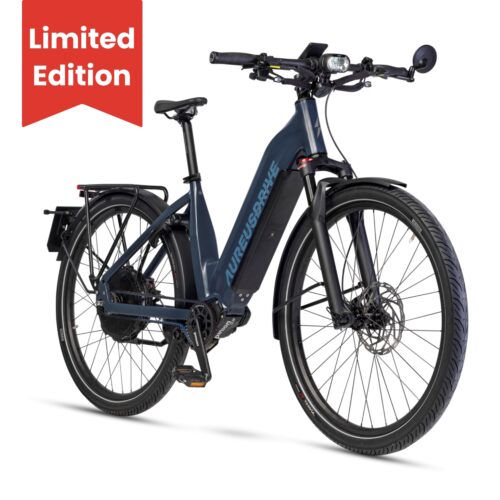

E-Bike & S-Pedelec Glossary: 40 Technical Terms Explained Simply
E-Bike & S-Pedelec Glossary: 40 Technical Terms Explained Simply
This glossary explains the 40 most important terms related to e-bikes and S-pedelecs—from Ah (ampere-hours, battery capacity) to torque sensor (measures pedaling force) to Wh/km (energy consumption per kilometer). Each term is explained in 1–3 sentences, with practical examples and references to Swiss law.
A: Ah, battery, start assist, and e-bike drive system
Ah (ampere-hour)
Unit of measurement for battery charge capacity. When multiplied by the voltage (V), it yields the capacity in Wh. Example: 14 Ah × 36 V = 504 Wh.
Rechargeable battery
The e-bike’s battery, usually a lithium-ion battery. Typical capacities: 400–1,000 Wh. Lifespan: 500–1,000 charge cycles.
Start-up Assistance
Motor assistance up to 6 km/h (e-bike) or 20 km/h (S-pedelec) without pedaling. Handy on hills or when carrying luggage.
Drive
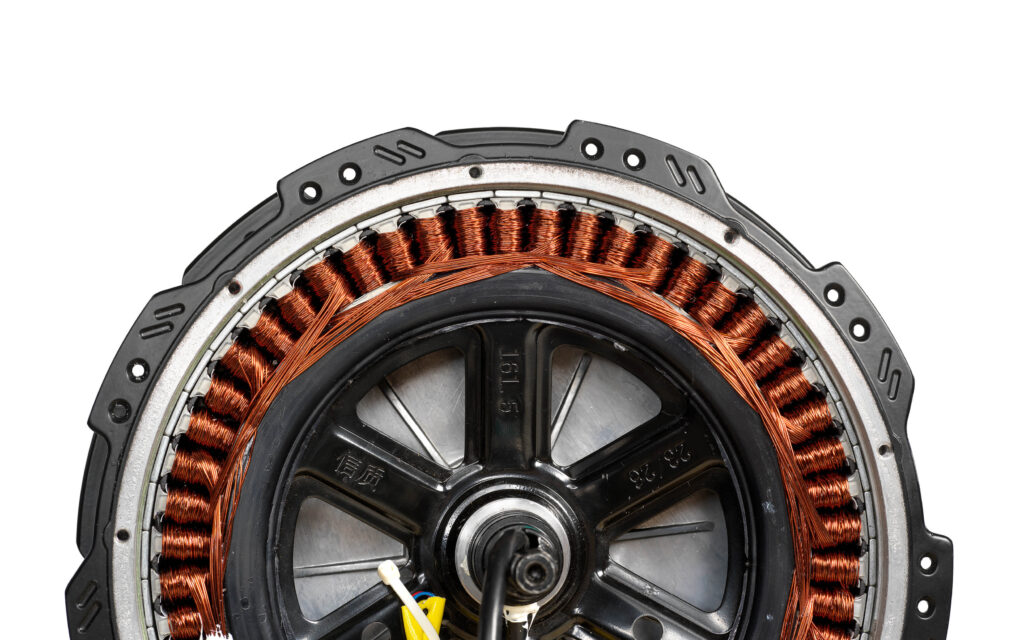
The motor of an e-bike. There are three types: mid-drive motor, hub motor (front/rear), and friction roller drive (obsolete & no longer in use).
B: Bosch E-Bike Motor, Boost Mode, and BMS
Bosch Performance Line
The most widely used mid-drive motor in Europe. The “Speed” version provides assistance up to 45 km/h and is therefore frequently used in S-pedelecs. AureusDrive, on the other hand, relies on powerful Ananda motors, which are designed to deliver a dynamic and reliable riding experience.
Boost Mode / Turbo
Highest support level. Uses 2–3 times more electricity than Eco.
BMS (Battery Management System)
Electronics inside the battery that monitor the cells, prevent overcharging, and extend the battery’s service life.
C: CE Marking for E-Bikes
CE Marking
EU conformity mark. Also required in Switzerland for motors, chargers, and helmets.
D: DailyDrive, Torque, and Torque Sensor
DailyDrive
AureusDrive’s model series for versatile everyday use. Depending on the model, the DailyDrive is available as a 25-km/h e-bike or a 45-km/h S-pedelec and is ideal for commuting, city riding, and leisure.
Torque (Nm)
Torque transmitted by the motor to the crank. Important on hills. Everyday use / commuting: 50 Nm; e-mountain bikes: 75–90 Nm
Torque Sensor
Measures how hard you’re pedaling and adjusts the motor power accordingly. Feels more natural than a cadence sensor alone.
E: E-bike, Eco Mode, and E-mountain bike
E-bike (Pedelec 25)
Electric bicycle with pedal assistance up to 25 km/h and a maximum motor power of 500 W. No driver’s license required, no license plate required.
Eco Mode
Lowest assistance level. Longest range, smooth motor engagement.
EMTB (E-Mountain Bike)
An off-road e-bike with more suspension, wide tires, and usually a more powerful motor.

Q: Driver’s license for high-speed e-bikes
Category M Driver’s License
License required for S-pedelecs in Switzerland. Available to those 14 years of age and older. Included with a car or motorcycle driver’s license.
H: Semi-integrated e-bike battery
Semi-integrated battery
Battery partially recessed into the frame—a compromise between aesthetics and ease of maintenance.
K: Cadence and License Plate
Cadence / Pedal Frequency
Crank revolutions per minute. Optimal for motor and battery: 70–90 rpm.
License plate (yellow)
Mandatory license plates for S-pedelecs in Switzerland. Issued by the cantonal motor vehicle department.
L: Charging Cycle and Lithium-Ion Battery
Charging cycle
A full charge from 0 to 100%. Two half-charges count as one cycle.
Lithium-ion battery
Current standard. High energy density, low weight, but sensitive to temperature.
M: Mid-engine and motorized bicycle
Mid-engine
Motor mounted on the bottom bracket axle. Good weight distribution, natural riding feel, usually more expensive than hub motors. Installed in the DailyDrive model by AureusDrive.
Motorcycle
Swiss legal term for S-pedelecs (Art. 18 VTS). Implies a driver’s license requirement, a vignette, and insurance.
N: Hub motor, Newton-meter, rated continuous power, and NTA-8776 helmet
Hub motor
The motor is located in the rear wheel hub. It enables direct, powerful acceleration and provides a dynamic riding experience, especially on S-pedelecs. In addition, it puts less strain on the chain and derailleur than a mid-drive motor and may therefore require less maintenance.
Nm (newton-meter)
Unit of torque. The higher the value, the more powerful the acceleration and hill-start assist. A motor with 100 Nm provides noticeably more power when pulling away and on steep inclines than a motor with 50 Nm.
Rated continuous power
Continuous motor power output in watts. Limited to 1,000 W for S-pedelecs.
NTA-8776 Helmet
A helmet standard developed specifically for S-pedelecs with a higher impact energy rating. Recommended for speeds of 45 km/h and above.
P: Pedelec, Power45, and PowerDrive
Pedelec
A portmanteau of “Pedal Electric Cycle.” A general term for pedal-assisted e-bikes.
Power45 / PowerDrive
AureusDrive model series –> Power45 & PowerDrive = 45-km/h S-pedelecs
R: Regenerative Braking and Range
Recuperation
Energy recovery during braking. In practice, this results in only a 3–5% increase in range for e-bikes.
Range
Kilometers per battery charge. Realistic estimate: Manufacturer’s stated range × 0.8.

S: S-Pedelec, push assist, and speed sensor
S-Pedelec
Fast e-bike with pedal assistance up to 45 km/h. Classified as a motorized bicycle in Switzerland.
Sliding Aid
Motor assistance when pushing (up to 6 km/h). Handy when pushing a fully loaded e-bike uphill.
Speed Sensor
Measures wheel speed and, for most manufacturers, cuts off assistance at 25 or 45 km/h.
T: Bottom bracket and cadence sensor
Bottom bracket
The axle to which the cranks are attached. In a mid-engine configuration, this is identical to the engine position.
Cadence Sensor
Detects only whether the pedal is being pressed—not how hard. More affordable, but less precise than torque sensors.
U: E-bike Assistance Levels
Support Levels
Mode names such as Eco, Tour, Sport, and Turbo. Set the percentage of your pedaling power that the motor contributes (40% to 400%).
V: Volt and Motorcycle Vignette
V (volt)
Voltage. E-bike batteries are usually 36 V or 48 V.
Vignette (Motorcycle)
Annual tax sticker for S-pedelecs in Switzerland, approx. CHF 40/year.
W: Watts, watt-hours, and consumption in Wh/km
W (watts)
Motor power. E-bikes up to 500 W, S-pedelecs up to 1,000 W (rated continuous power).
Wh (watt-hour)
Battery capacity. 500–1,000 Wh is standard today.
Wh/km (Fuel Consumption)
Power consumption per kilometer. Estimated range: 10 Wh/km (Eco, flat terrain) to 25 Wh/km (Turbo, hilly terrain).
FAQ About the Glossary
What is the main difference between an e-bike and an S-pedelec?
The maximum speed with motor assistance: 25 km/h for e-bikes, 45 km/h for S-pedelecs—and the resulting driver’s license and insurance requirements.
What does “Nm” mean in the context of e-bike motors?
Newton-meters, or torque. 50 Nm is enough for flat terrain and gentle hills; 75+ Nm is needed for steep climbs and heavy loads.
How many Wh does a battery need to travel 50 km?
Assuming an average consumption of 15 Wh/km: about 750 Wh, with a little extra.
Is a torque sensor better than a cadence sensor?
Yes. It responds more precisely to your pedaling force and modulates the motor power more naturally—you can really feel the difference in everyday use.
What is an NTA-8776 helmet?
A helmet standard specifically designed for S-pedelec speeds, featuring a larger impact zone and temple protection.
Conclusion: Find the Right E-Bike with the Right Knowledge
Whether it’s the battery, torque, or rated continuous power: If you know the most important e-bike terms, you can compare models more effectively and find the right bike for your everyday life more quickly.
At AureusDrive, we develop e-bikes and S-pedelecs for people who want to get around reliably, efficiently, and with plenty of riding fun. Whether it’s your daily commute, a longer trip, or a weekend getaway, the right e-bike makes getting around easier.
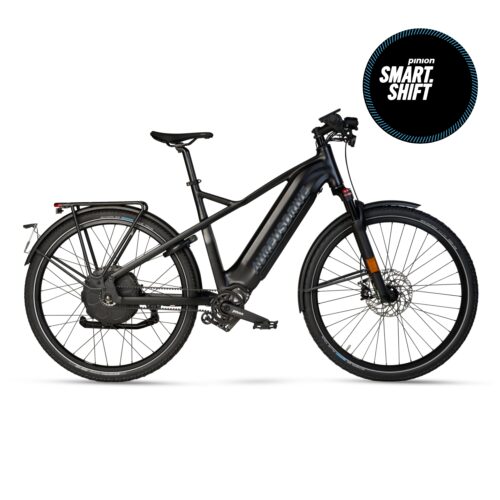
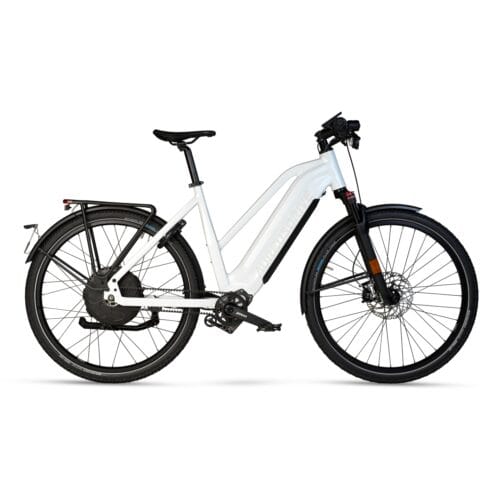
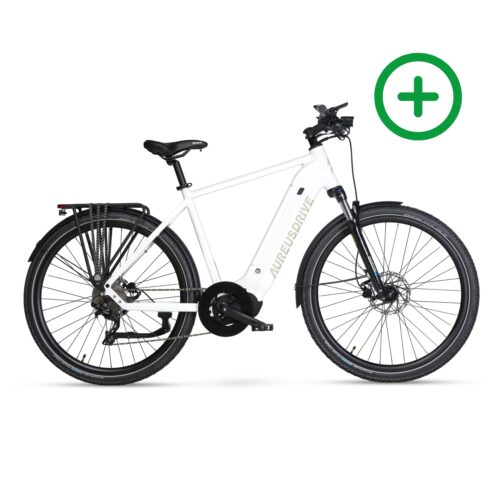
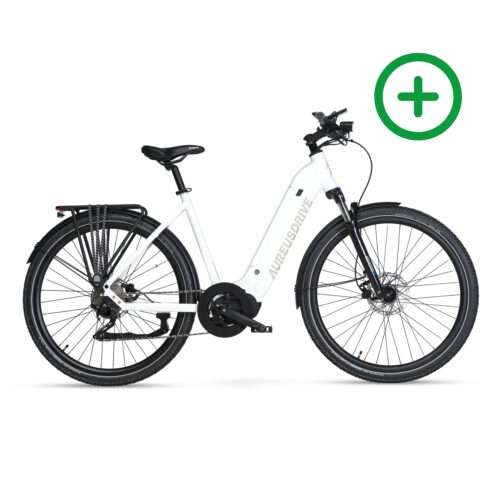
Still not sure which model is right for you? Check out our PowerDrive and Power45 models or schedule a test drive. That way, you can experience firsthand which drivetrain, power, and range best suit your everyday life.
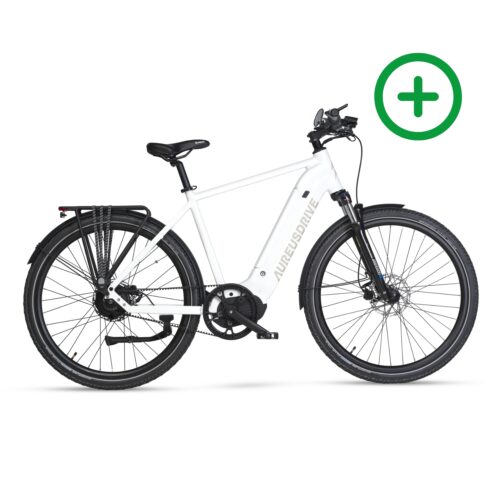
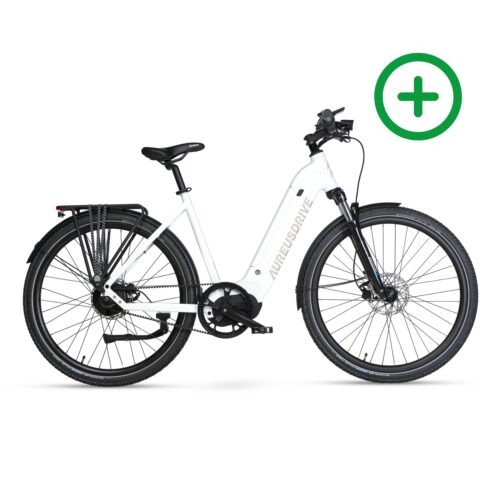
E-bike models from AureusDrive:


Further contributions
-
E-Bikes Instead of Cars: When It’s Worth Making the Switch in Switzerland
E-Bikes Instead of Cars: When It’s Worth Making the Switch in Switzerland A car is convenient, but it isn’t always…
-
Speed-Pedelec Switzerland 2026: Rules, Benefits, and Buying Guide
Speed-Pedelec Switzerland 2026: Rules, Benefits, and Buying Guide A speed pedelec is more than just a regular e-bike.With assistance up…
-
E-bike leasing in Switzerland
The smart alternative to buying – for individuals and businesses A high-quality e-bike or speed pedelec is an investment. At…