
E-Bike vs. ÖV: Rechnet sich der Umstieg vom GA?
E-bike vs. public transport: Is it worth switching from a GA or a zone pass?
Short answer
A 2nd-class GA for adults costs CHF 3,995 per year. However, anyone who mainly commutes distances of around 20 kilometres should compare not only the GA but also the regional Passepartout zone pass. For the Hochdorf–Lucerne route, for example, zones 10, 26 and 37 are required. As zone 10 counts double, the price tier for four zones applies. The annual pass for adults in 2nd class costs CHF 1,467.
An S-Pedelec costing CHF 4,490 pays for itself compared to the GA after around 1.25 years. Compared to the zone pass, the payback period is approximately 3 years based on the operating costs assumed here. The financial advantage over the regional pass is therefore smaller. On the other hand, depending on where you live and work, the S-Pedelec can save you time every day.
Comparison route: Hochdorf–Lucerne
The distance between Hochdorf and Lucerne is approximately 21 kilometres, depending on the route chosen. With 220 working days and a daily return journey, this amounts to just under 9,000 kilometres per year.
This distance falls within the ideal range for an S-pedelec: long enough for the electric assistance to be well worth it, but short enough to cover the commute without needing to recharge en route.
he 5-year cost comparison
Basis: Hochdorf→Lucerne commuter route (21 km), 220 working days
| Option | GA 2. class | Passepartout-Zoneticket | S-Pedelec |
|---|---|---|---|
| Purchase or season ticket per year | CHF 3’995 | CHF 1’467 | CHF 900 (Amort. over 5 J.,) |
| Ongoing additional costs | CHF 0 | CHF 0 | CHF 375 (electricity, maintenance, insurance) |
| Coverage | Whole of Switzerland | Zones 10, 26 and 37 | Whole of Switzerland |
| Annual total | CHF 3’995 | CHF 1’467 | CHF 1’275 |
| 5-year-Total | CHF 19’975 | CHF 7’335 | CHF 6’375 |
| Savings with an S-Pedelec (5 years) | CHF 13’600 | CHF 960 |
The S-Pedelec is significantly cheaper than the GA travelcard. Compared with the regional zone pass, however, the savings over five years amount to around CHF 960. The calculation is based on the S-Pedelec being written off over five years and assumed running costs of CHF 375 per year.
Journey time comparison: Hochdorf–Lucerne
According to the current timetable, the direct train journey between Lucerne and Hochdorf takes approximately 26 minutes. However, this is only the journey time from station to station.
| Mode of transport | Pure journey time | Estimated door-to-door time |
|---|---|---|
| Train | approx. 26 Min. | approx. 42-57 Min. |
| S-Pedelec | approx. 35-40 Min. | approx. 38-44 Min. |
| Car | highly dependent on traffic | approx. 25-45 Min. |
The actual time depends heavily on how far your home and workplace are from the respective station.
With the S-Pedelec, the journey starts right on your doorstep. There is no walk to the station, no waiting time and usually no need to change trains. Furthermore, journey times remain relatively consistent even during rush hour.
The train, on the other hand, offers advantages in heavy rain, snow and very low temperatures. Moreover, the journey time can be used for working, reading or relaxing. The decisive factor is therefore not just the actual journey time, but also how that time is perceived and utilised.

When is the GA pass the better option?
- Long-distance commuters >30 km one way – SBB travelling faster than 45 km/h on average
- Frequent business trips to other cantons
- Regular weekend trips to other regions of Switzerland
- No interest in exercise or physical activity
- Aversion to extreme weather (winter, rain)
When is the zone pass the better option?
The Passepartout zone pass is particularly attractive if your home and workplace are close to railway stations. It offers a weather-independent connection and can also be used for buses and further train journeys within the zones covered by the pass.
At CHF 1,467 per year, the Zone Pass is only slightly more expensive than the total annual cost of the S-Pedelec. The decision therefore depends more on journey time, exercise, comfort and personal tolerance of the weather than on price.
When is the S-Pedelec a better option?
- Commute of 5–20 km – fast and direct
- Urban environment – cars and public transport often slower than the S-Pedelec
- Fitness & health important
- Environmental awareness – 40 times less CO₂ than using a GA travelcard
- Flexible working hours – no timetable
The hybrid solution: Halbtax and S-Pedelec
An interesting alternative is the combination of an S-Pedelec and a Halbtax:
| Item | Annual cost |
|---|---|
| S-pedelec including depreciation and running costs | approx. CHF 1’235 |
| Half-Fare Card for adults | CHF 190 |
| Total base cost | approx. CHF 1’425 |
| Occasional train journeys | based on usage |
A new Half-Fare Card for adults costs CHF 190 per year.
If you factor in an additional CHF 300 for individual train journeys, days of bad weather and day trips, the total comes to around CHF 1,725 per year. That is around 57 per cent less than a GA. Whilst this combination is not necessarily cheaper than the Passepartout zone pass, it does offer significantly more flexibility for travel outside the region.
Health and time factors with the S-Pedelec
- 30 mins’ daily exercise → fewer back and heart problems
- No waiting on the platform
- No changing trains
- Dependent on the weather rather than the timetable
Environmental impact comparison
- GA usage (5 years): approx. 350 kg CO₂/year (SBB electricity mix, train share)
- S-Pedelec (5 years): approx. 15 kg CO₂/year
- Car (5 years): approx. 1,800 kg CO₂/year
The S-Pedelec is over 20 times more climate-friendly than the GA train (because trains are still infrastructure- and energy-intensive)..
FAQ
Can I take my S-Pedelec on the train?
Yes, with a bike ticket (CHF 14 day ticket or CHF 240 annual bike pass).
What if I work from home 2–3 days a week?
Then the figures favour the S-Pedelec even more. A GA travelcard usually only pays off if you commute 4 days a week or more.
Is it worth it for part-time commuters (60%)?
Yes. Even at 60% usage, the S-pedelec pays for itself within 2 years.
Is the SBB Business discount comparable to that for an S-Pedelec?
No, companies can usually offer a bigger discount on GA travelcards (up to 30%). Nevertheless, it’s often more expensive than the S-Pedelec package.
What about winter service disruptions?
For 20–30 winter days a year: individual SBB tickets (with a Half-Fare card) are cheaper than a full GA travelcard.
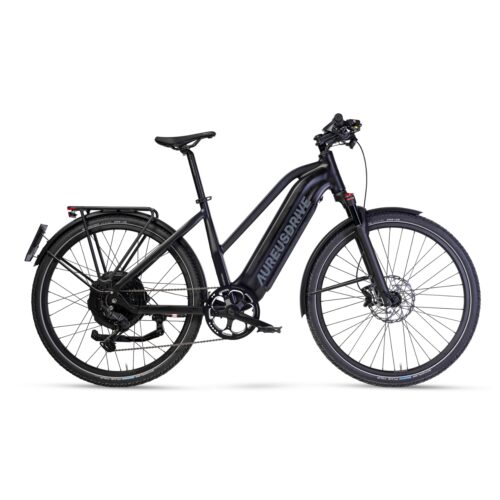
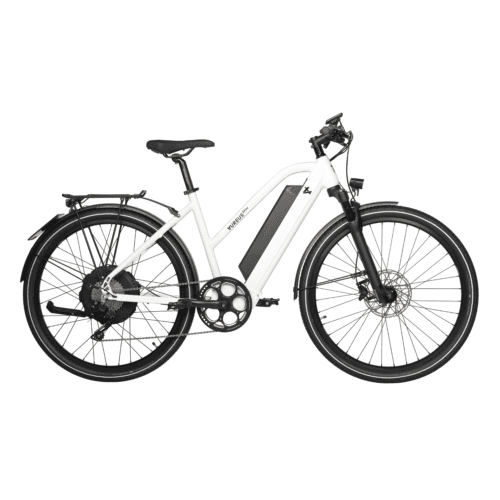
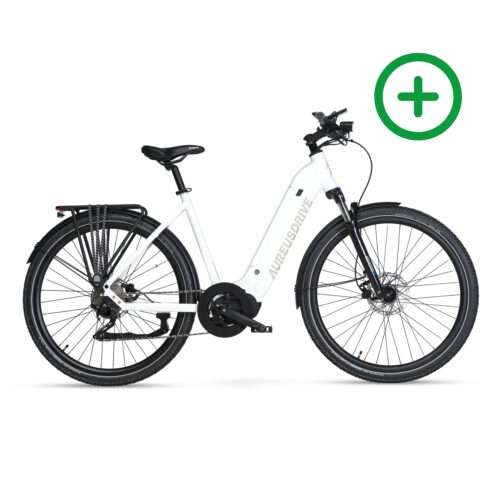
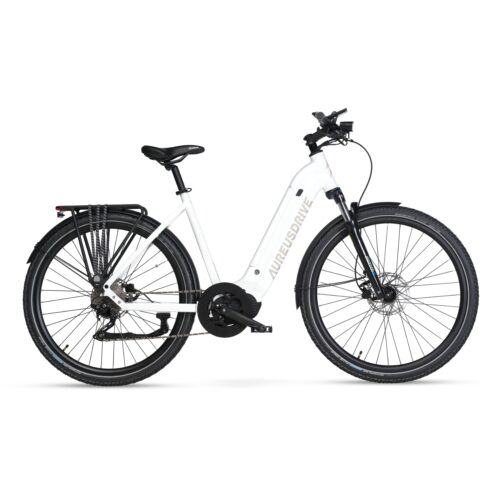
Our recommended S-Pedelecs for commuting
Further contributions
-
S-Pedelec maintenance: When each service is due
Short answer An S-pedelec requires 1–2 services per year (approx. CHF 150–350) plus personal checks every 500 km. In addition…
-
E-Bike & S-Pedelec Glossary: 40 Technical Terms Explained Simply
E-Bike & S-Pedelec Glossary: 40 Technical Terms Explained Simply This glossary explains the 40 most important terms related to e-bikes…
-
E-Bikes Instead of Cars: When It’s Worth Making the Switch in Switzerland
E-Bikes Instead of Cars: When It’s Worth Making the Switch in Switzerland A car is convenient, but it isn’t always…